3-Tab vs. Architectural Shingles: What Texas Homeowners Need to Know
3-Tab vs. Architectural Shingles: What Texas Homeowners Need to Know
When homeowners in the New Braunfels area start getting roofing estimates, the first big material choice is almost always between 3-tab and architectural asphalt shingles. Both are asphalt-based, both are installed by the same crews with the same underlayment and flashing systems, and both end up on Texas rooftops in large numbers. But the performance gap between them is substantial — and in a climate like ours, with intense UV exposure, brutal summer heat, and hailstorms that roll through the Hill Country every year, the upgrade pays back quickly.
This post explains what actually separates 3-tab from architectural shingles at the manufacturing level, how the warranties differ, what real-world lifespan looks like in Central Texas, and when (rarely) 3-tabs still make sense.
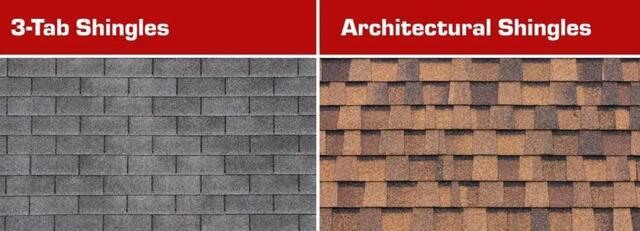
What's Physically Different?
A 3-tab shingle is a single flat strip of fiberglass-reinforced asphalt, roughly 12″×36″, with two cuts creating three visible rectangular "tabs" along the bottom edge. All tabs are identical, so the finished roof has a flat, uniform, slightly repetitive appearance. Weight per square (100 sq ft): 200–235 lb. Thickness: approximately 3/32″.
An architectural shingle (also called laminate or dimensional) is made of two layers of asphalt bonded together during manufacture. The bottom layer is a full strip; the top layer has random cutouts that expose the bottom layer in an irregular pattern, creating the illusion of wood shakes or slate. Weight per square: 280–450 lb (significantly heavier). Thickness: approximately 5/32″ to 7/32″. The extra weight, asphalt mass, and structural stability are what give architectural shingles their superior wind, hail, and lifespan performance — all critical factors here in Central Texas.
Side-by-Side Specifications
| Specification | 3-Tab | Architectural (Standard) | Designer/Premium Arch |
|---|---|---|---|
| Weight per square | 200–235 lb | 280–400 lb | 400–550 lb |
| Thickness | ~3/32″ | ~5/32″–7/32″ | ~7/32″–9/32″ |
| Wind rating (ASTM D7158) | Class D (90 mph) | Class H (150 mph) | Class H (150 mph) |
| Hail rating (UL 2218) | Not typically rated | Class 3 typical | Class 4 available |
| Standard warranty | 20–25 yr limited | Limited lifetime | Limited lifetime |
| Realistic TX lifespan | 12–18 yr | 20–25 yr | 22–28 yr |
| 2026 TX installed price (22 sq) | $6,000–$8,000 | $8,500–$11,000 | $12,000–$17,000 |
Why 3-Tabs Fail Earlier in Texas
- Intense UV exposure breaks down the thinner asphalt layer faster, accelerating granule loss and cracking in the Texas sun.
- Lower wind rating makes 3-tabs vulnerable to the severe thunderstorm winds common across Central Texas. Gusts of 70–80 mph easily lift poorly sealed 3-tabs.
- Cut-line exposure: the slots between tabs are potential entry points for water when sealant fails — a serious issue during heavy Texas rain events.
- Faster granule loss due to thinner wear layer; granule loss in gutters is typically visible by year 8–10 on 3-tabs in hot climates.
- Heat damage: thinner asphalt mass means less ability to handle the expansion and contraction caused by Texas temperature swings.
- Repetitive pattern makes mismatched replacement tabs obvious — even a minor repair looks bad.
Why Architectural Shingles Outperform in Texas
- Double-layer construction provides structural depth — hail impacts are absorbed by the top layer without puncturing through.
- Higher asphalt weight improves durability under extreme heat and UV exposure; asphalt stays stable longer.
- Improved sealant and nail placement means wind-uplift resistance at Class H (150 mph) with proper installation.
- Random exposure pattern hides repair patches and granule wear.
- Better warranty terms including "limited lifetime" and labor-inclusive coverage on top-tier installs.
Cost Analysis: The Real ROI
On an average New Braunfels home (22 squares), the price difference between 3-tab and standard architectural is typically $1,800–$2,800. Spreading that over the extra lifespan:
| Metric | 3-Tab | Architectural |
|---|---|---|
| 2026 TX installed cost (22 sq) | $7,000 (avg) | $9,750 (avg) |
| Realistic lifespan in TX | 15 yr | 22 yr |
| Annualized cost | $467/yr | $443/yr |
| Repair frequency | Higher | Lower |
| Resale perception | "Builder-grade" | Standard expectation |
| Insurance discount eligibility | No | Yes (Class 4 available) |
On a pure annualized basis, architectural shingles are actually cheaper than 3-tabs in Texas — and that's before accounting for repair costs, insurance premium differences, and resale value. The upfront premium is the only place 3-tabs "win," and even that's a wash once you factor in lifespan.
When Do 3-Tab Shingles Still Make Sense?
- Short-term hold properties — you're planning to sell or tear down within 5–7 years
- Rental properties with tight cash flow
- Matching existing 3-tab on a partial repair where total replacement isn't justified yet
- Outbuildings, sheds, and accessory structures where aesthetics and lifespan matter less
- Historic matching where the original roof was 3-tab and the homeowner wants historical accuracy
For a primary residence in New Braunfels or the surrounding Hill Country that you plan to live in for 8+ years, 3-tab is almost never the right choice.
Architectural vs. Designer/Premium: Is Premium Worth It?
Above standard architectural, there's a premium tier — "designer" or "luxury" shingles like GAF Grand Canyon, Owens Corning Berkshire, CertainTeed Grand Manor, and Malarkey Vista. These add $3,000–$5,000+ to the project and offer:
- Heavier construction (400–550 lb/square vs 300–380)
- Deeper shadow lines mimicking slate or wood shakes
- Often SBS-modified asphalt for improved hail performance
- Class 4 hail ratings more commonly available
- More color depth and dimensional realism
The performance gain over standard architectural is real but marginal. The bigger reason to go designer is aesthetics — on higher-end homes in the Hill Country, the depth and shadow lines of a designer shingle make a visible difference from the street. On standard suburban housing, standard architectural is the sweet spot.
Texas tip: Class 4 impact-rated shingles are worth serious consideration here in Central Texas, where hail season runs roughly March through June. Many Texas insurance carriers offer meaningful premium discounts for Class 4 rated products.
Installation Differences
Installation is broadly similar — same underlayment, same flashing, same nailing patterns — with some subtle differences:
- 3-tabs use a standard 5″ reveal/exposure per course; architectural shingles vary from 5″ to 5â…" depending on brand.
- Nail placement on architectural shingles is more forgiving due to the double-layer structure; 3-tabs are much more sensitive to "high nails" that miss the sealant line.
- Cut-and-seal patterns differ — architecturals are typically laid with a 6″ offset; 3-tabs at 4″ or 5″.
- Ridge-cap options are broader for architectural products (matching laminate caps vs. field-cut 3-tab caps).
What's on Most New Braunfels Homes Right Now?
Among homes built before 2000 in our area, 3-tab shingles were the standard. Since roughly 2005, architectural has become the clear majority install, and since 2015 it's essentially become the default — even on builder-grade new construction. If you're buying an older home with original shingles, there's a good chance it has 3-tab and may be nearing or past end-of-life, especially given our intense Texas sun.
Frequently Asked Questions
Can I mix 3-tab and architectural on the same roof? Technically yes, but aesthetically it looks terrible and it voids warranty eligibility. Always match type across the entire roof.
Does my insurance care if I choose 3-tab vs. architectural? Most insurers don't price coverage differently based on shingle type alone. However, Class 4 impact-rated architectural shingles can qualify for a wind/hail mitigation discount of 5–20% depending on your carrier — a significant savings in Texas where hail claims are common.
Do architectural shingles really last longer in Texas? Yes — consistently. In our experience, architectural shingles in Central Texas routinely reach 22–25 years before replacement, while 3-tabs often hit their limit at 15–18 years due to UV exposure and heat.
Are designer shingles worth the premium? For aesthetics on higher-end Hill Country homes, yes. For pure performance on standard suburban housing, standard architectural is the better value. Class 4 impact-rated designer shingles are a special case where the insurance discount can help offset the premium over time.
Can I install architectural shingles on a low-slope roof? Only down to a 2:12 pitch (and with additional underlayment between 2:12 and 4:12). Below 2:12, you need a dedicated low-slope roofing system.
What's the difference between "architectural" and "dimensional"? They're the same thing — just different marketing terms for laminated, multi-layer shingles. "Architectural," "dimensional," and "laminate" all refer to the same product category.
Ready to Upgrade Your Roof?
At Klaus Roofing, we help homeowners throughout New Braunfels and the surrounding Hill Country choose the right shingle for their home, budget, and long-term goals. Whether you're replacing an aging 3-tab roof or upgrading to a Class 4 impact-rated architectural shingle, our team will walk you through every option with honest, no-pressure guidance.
Request your free roof inspection today and let us help you make the smartest investment for your home.