Asphalt Shingles Explained: What They're Made Of (And Why It Matters in Texas Hill Country)
Most roofs in Texas—and across the U.S.—are covered in asphalt shingles. Yet few homeowners, property managers, or even some contractors can explain exactly what’s protecting the structure underneath. That knowledge gap leads to premature replacements, poor storm performance, higher insurance headaches, and missed opportunities to choose the right product for local conditions.
Whether you own a home in Vintage Oaks, manage properties in Canyon Lake, run an HOA in Garden Ridge, or operate in the broader Hill Country around New Braunfels and Boerne, understanding shingle composition helps you make smarter decisions, spot quality work, and protect investments against Texas weather extremes.
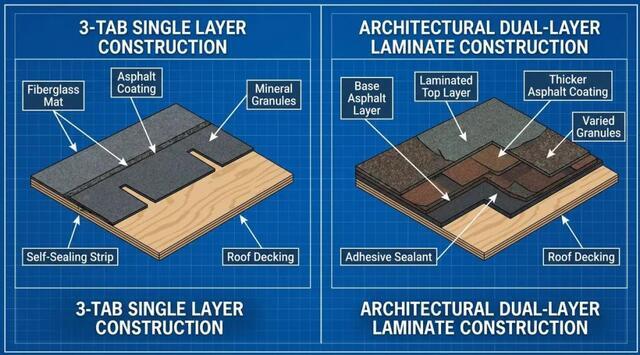
The Three Core Components of Asphalt Shingles
Every asphalt shingle consists of the same basic building blocks: a base mat, asphalt coating, and surface granules. Quality differences in these layers determine durability, lifespan, weather resistance, and long-term value.
1. Base Mat: The Structural Foundation
The base mat gives the shingle its strength and shape. Modern shingles almost exclusively use fiberglass mats—woven glass fibers bonded with stable resins. These replaced older organic mats (cellulose/paper-based) that were common before the 1980s–1990s.
Why fiberglass wins:
- Doesn’t absorb moisture, so it resists warping, cracking, and freeze-thaw damage.
- Better dimensional stability and fire resistance (often Class A ratings).
- Lighter weight, which reduces stress on roof structures.
- Denser, heavier mats in premium lines offer superior tear resistance.
Organic mats are rarely recommended today, especially in areas with hail, high winds, or humidity swings.
2. Asphalt Coating: The Waterproofing Heart
Asphalt saturates and coats both sides of the base mat to create a waterproof barrier. Modern roofing asphalt is a refined petroleum product enhanced with polymers for better performance.
Key upgrade: SBS (styrene-butadiene-styrene) modified asphalt adds flexibility and elasticity. This is critical in Texas Hill Country, where roofs endure intense summer heat (often 100°F+), UV exposure, and occasional cold snaps or hail. Standard oxidized asphalt becomes brittle faster; polymer-modified versions handle expansion/contraction cycles much better and maintain waterproofing longer.
Thicker asphalt coatings in higher-quality shingles also improve UV protection and overall longevity.
3. Granules: Protection, Color, and Performance
The visible rock-like particles on top aren’t just for looks. They’re typically crushed mineral rock (e.g., granite) coated with ceramic for color and embedded in the asphalt.
What granules deliver:
- UV shielding: They block sunlight from degrading the asphalt underneath. Granule loss exposes asphalt, leading to brittleness and streaks.
- Fire resistance: Non-combustible layer contributes to higher fire ratings.
- Impact and weather resistance: Helps with hail and wind performance.
- Aesthetics and algae resistance: Blended colors for dimensional looks; copper-infused options fight algae (relevant on shaded or north-facing slopes).
Types of Asphalt Shingles: Choose Based on Needs
- Three-Tab Shingles: Basic, flat, single-layer design. Affordable but thinner, lighter, and less wind/hail resistant. Shorter lifespan (often 15–20 years). Best for outbuildings or temporary needs, not primary residences in storm-prone areas.
- Architectural (Dimensional/Laminate) Shingles: Multi-layer construction for thickness, shadow lines, and a premium look mimicking slate or shake. Stronger wind resistance (often 110–130+ mph warranties), better impact performance, and 25–30+ year lifespans. The go-to choice for most Hill Country homes.
- Premium/Designer Shingles: Enhanced materials, superior impact ratings (Class 3 or 4), advanced granule blends, and longer warranties. Ideal for high-end properties or maximum hail/wind protection.
Texas Hill Country Considerations
Central Texas brings intense sun, hail events, high winds, heavy rains, and temperature swings. Shingle composition directly affects performance here:
- Hail & Impact: Look for UL 2218 Class 4 impact-rated shingles—these use reinforced mats and modified asphalt to absorb energy without cracking. Many insurers offer discounts.
- Wind Resistance: Prioritize high-wind rated products and proper installation (enhanced nailing, underlayment).
- Heat & UV: Polymer-modified asphalt and dense granule coverage slow degradation in our intense sun.
- Moisture & Ventilation: Good attic ventilation + quality underlayment (including ice/water shield in key areas) pairs with better shingle composition to combat leaks.
Local factors like HOA requirements, 50-year warranties on premium systems, and competition from storm chasers make informed choices even more valuable.
Common Misconceptions
- “All asphalt shingles are basically the same.” — Material quality and construction vary dramatically in performance.
- “Cheapest or most expensive is always best.” — Match the product to your home, budget, location, and stay duration.
- “Installation doesn’t matter if the shingles are good.” — Poor installation can void warranties and cause early failure. Work with experienced local crews.
- “Wait for leaks before inspecting.” — Regular checks catch granule loss, curling, or damage early.
Actionable Advice for Homeowners, HOAs, and Pros
- Inspect regularly — Twice a year (spring/fall) or after major storms. Look for granule loss, curling edges, or missing shingles.
- Ask the right questions — When getting quotes: fiberglass mat? Polymer-modified asphalt? Wind/hail ratings? Manufacturer certification?
- Prioritize local expertise — Local teams understand Hill Country microclimates, HOA rules, and long-term maintenance.
- Consider total cost of ownership — Higher upfront quality often saves money over decades through fewer replacements and better insurance outcomes.
At Klaus Roofing Systems of Texas Hill Country, we specialize in premium, hail-resistant asphalt shingle systems (alongside metal options) backed by strong warranties and honest, neighbor-focused service. We help homeowners and property managers choose materials that truly perform in our local conditions—not just what’s cheapest or hyped.
Understanding what’s on your roof empowers better maintenance, smarter replacements, and real protection for your property and family. Have questions about your current shingles or planning a project? Reach out—we’re here to help with transparent advice tailored to the Texas Hill Country.