What Are Architectural Shingles? Benefits, Cost & Lifespan for New Braunfels & Texas Hill Country Homes (2026)
If you’re planning a roof replacement in New Braunfels, Canyon Lake, or anywhere in the Texas Hill Country, you’ve likely heard the term “architectural shingles.” They’re also called dimensional or laminated shingles, and they’ve become the most popular choice for asphalt roofs in our area for good reason.
But what exactly are they, how do they compare to the older 3-tab style, and are they worth it in our hot, stormy climate? As a locally owned roofing company that installs and services roofs across Comal County and the Hill Country — including after hail events — here’s a straightforward, no-hype guide based on what we see every day.
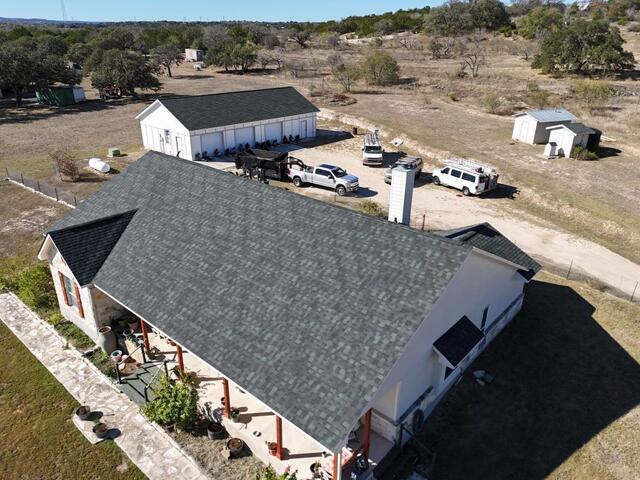
What Are Architectural Shingles Made Of?
Architectural shingles are multi-layered asphalt roofing products. Unlike basic shingles, they’re built with two or more laminated layers that create thickness, texture, and shadow lines.
Core components include:
- A strong fiberglass mat for stability and tear resistance
- Asphalt coating for waterproofing and flexibility
- Ceramic-coated mineral granules for UV protection and color
- A heat-activated self-sealing adhesive strip that bonds the shingles together once installed
Many premium lines (including options we install locally like IKO Dynasty) add reinforced nailing zones or polymer-modified asphalt for extra performance in wind and impact.
The result is a heavier, more substantial shingle that looks dimensional — similar to the texture of cedar shakes or slate — rather than flat and uniform.
Architectural Shingles vs. 3-Tab Shingles
This is one of the most common questions we get. Here’s the practical difference:
| Feature | 3-Tab Shingles | Architectural (Dimensional) Shingles |
|---|---|---|
| Construction | Single flat layer | Multi-layered / laminated |
| Weight | Lighter (~200–250 lbs per square) | Heavier (300–450+ lbs per square) |
| Appearance | Flat, uniform tabs | Textured with depth and shadow lines |
| Wind Resistance | Typically 60–70 mph | 110–130+ mph (some systems higher) |
| Impact/Hail Resistance | Basic | Class 3 or Class 4 options available |
| Lifespan (typical) | 15–25 years | 25–35+ years with proper installation |
| Warranties | Shorter (often 20–30 years) | Limited lifetime material; stronger with certified installers |
| Curb Appeal | Basic | Significantly better — more like premium materials |
Bottom line: Architectural shingles are thicker, stronger, and look better. Real-world data and our local experience show they handle wind uplift and weathering far better than 3-tab.
5 Key Benefits of Architectural Shingles in the Texas Hill Country
- Better Wind Resistance Our spring and summer thunderstorms can bring strong straight-line winds. Architectural shingles’ extra weight and laminated construction help them stay put. Many lines are rated 110–130 mph, and some enhanced systems perform even better when installed as a complete system.
- Longer Lifespan Expect 25–35+ years with quality installation, good attic ventilation, and maintenance. In our intense Texas sun and heat, proper ventilation is especially important — it prevents premature aging that can happen when attics get too hot.
- Superior Curb Appeal & Resale Value The textured, dimensional look adds visual interest and depth. Many homeowners and real estate agents tell us a new architectural shingle roof helps a home show better and can support stronger resale value compared to basic 3-tab.
- Improved Impact & Hail Performance Premium architectural shingles are available with Class 3 or Class 4 impact ratings (the highest for asphalt). These can qualify you for insurance premium discounts in hail-prone parts of Central Texas. While no asphalt shingle is completely hail-proof against large stones, the thicker construction absorbs energy better than 3-tab.
- Stronger Warranties Most architectural lines come with limited lifetime material warranties. Enhanced coverage (including better labor protection) is available when installed by certified contractors using the manufacturer’s full system recommendations.
What Do Architectural Shingles Cost in 2026?
In the New Braunfels / Central Texas area, quality architectural shingle roof replacements typically range from $5.50 – $8.50+ per square foot installed (including tear-off, synthetic underlayment, and proper ventilation work).
For a typical 2,000 sq ft roof, expect $11,000 – $17,000+ depending on:
- Roof complexity and pitch
- Whether you choose impact-rated (Class 4) or designer colors
- Decking condition and any needed repairs
- Full-system upgrades (ventilation, ice & water shield in valleys, etc.)
This is usually 15–30% more than basic 3-tab but delivers significantly better performance and longevity, which often makes the annualized cost lower over time.
How Long Do Architectural Shingles Last Here?
Realistically 25–35 years in the Texas Hill Country when installed correctly with good ventilation and maintenance. Factors that shorten life include poor attic airflow (very common issue in our hot climate), inadequate underlayment, or skipping regular inspections after storms.
Tips to maximize lifespan:
- Ensure balanced intake and exhaust ventilation
- Use quality synthetic underlayment
- Address any hail or wind damage promptly
- Schedule professional inspections every 1–2 years
FAQs About Architectural Shingles in Texas
Are architectural shingles worth the extra cost over 3-tab? For most homeowners planning to stay in their home 7+ years or who value appearance and storm performance, yes. The longer lifespan, better wind/impact resistance, and curb appeal usually make the premium worthwhile.
How do they perform in hail? Better than 3-tab, especially Class 3 or 4 rated versions. Many of our neighbors have seen good results with impact-rated architectural shingles after smaller hail events. For homes with higher hail exposure or previous claims, we often discuss premium metal options as well.
Will they help lower my insurance premiums? Class 3 and especially Class 4 impact-rated architectural shingles frequently qualify for discounts. Ask your insurance agent with the specific product name and rating.
Can they be installed over existing shingles? We strongly recommend a full tear-off. Installing over old layers can void warranties, trap moisture, and hide decking problems — especially risky in our climate.
How do architectural shingles compare to metal roofs? Architectural shingles offer excellent value, great looks, and solid performance for many homes. Premium metal roofing (which we specialize in) typically provides superior hail resistance, longer lifespan (50+ years), and lower long-term maintenance. The best choice depends on your home’s specific exposure, budget, and goals.
The Bottom Line for Hill Country Homeowners
Architectural shingles are a smart, popular choice for New Braunfels and Texas Hill Country homes. They deliver better durability, appearance, and protection than basic 3-tab shingles — especially when you choose quality lines installed as a complete system with proper ventilation and underlayment.
That said, every home is different. Some properties benefit more from premium impact-rated architectural shingles, while others are better served by metal roofing for maximum hail and longevity protection.
Want honest, personalized guidance for your roof? We offer free, no-obligation roof inspections and clear explanations of your options — including architectural shingles (such as IKO Dynasty and similar high-performance lines) and our premium metal systems. We’ll walk you through performance, cost, warranties, and insurance considerations based on your specific home and neighborhood.
Contact Klaus Roofing Systems of Texas Hill Country today to schedule your inspection. Locally owned and serving New Braunfels, Canyon Lake, and the surrounding Hill Country communities with straightforward advice and quality work you can trust.
This guide reflects manufacturer specifications, industry standards, and our direct experience with roofs in the Texas Hill Country as of 2026. Product performance and warranties can vary — we always review current details during consultations.