Wind Damage Roof Insurance in Texas: How Claims Actually Work For Homeowners
High winds from a Texas thunderstorm or straight-line wind event can rip shingles off your roof in minutes. You walk outside the next morning and see missing shingles or lifted edges in your New Braunfels neighborhood — or maybe in Canyon Lake, Gruene, or Boerne.
The big question is: Should you file an insurance claim? And if you do, how do you make sure you get the full repair or replacement you’re entitled to instead of a lowball offer or a denial?
Wind damage claims in Texas follow a specific process. The decisions you make in the first 24–48 hours often determine whether you get a full slope replacement, a partial repair, or nothing at all. Most homeowners don’t know the rules, so they end up underpaid or fighting the insurance company later.
At Klaus Roofing Systems of Texas Hill Country, we’ve seen this happen too many times. We’re a locally owned company serving New Braunfels and the surrounding Hill Country communities. Our goal is to give you clear, honest information so you can protect your home and your claim — with no pressure and no games.
TL;DR – What You Need to Know Right Now
- Document everything immediately — wide photos, close-ups, and videos with timestamps.
- Pull the National Weather Service (NWS) or NOAA storm report for your exact date and location. This proves a covered wind event happened.
- Get a reputable local roofer inspection (not a storm chaser) before or right when you file. Their detailed report and photos become powerful evidence.
- File promptly — most Texas policies want notice within 30–60 days (check yours). Sooner is always better.
- Know your deductible — Texas policies often use a separate wind/hail deductible that’s a percentage of your dwelling coverage (commonly 1–2%). On a $400,000 home, that could mean $4,000–$8,000 out of pocket before insurance pays anything.
- Have your contractor present when the adjuster comes if possible. The initial offer is almost never the final one.
- We never waive or rebate your deductible — that’s illegal in Texas, and we won’t do it.
What Wind Damage Actually Looks Like on Texas Roofs
Wind damage isn’t always dramatic. Here’s what we commonly see after Hill Country wind events:
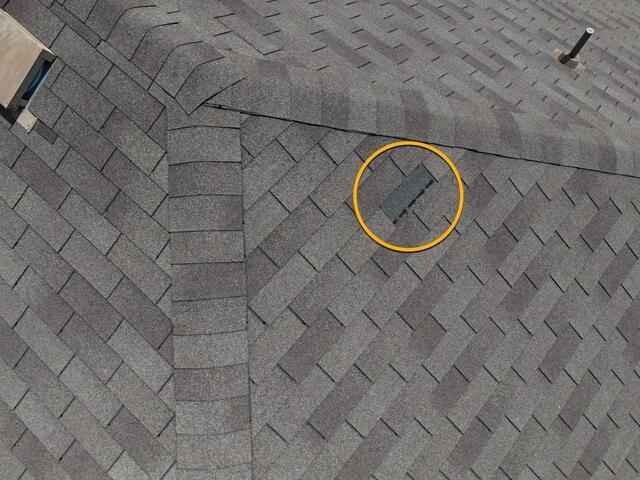
- Missing shingles — The clearest sign. You can often see the nail heads or underlayment exposed.
- Wind-lifted (uplift) shingles — Shingles that lifted during the gust but mostly stayed in place. From the ground they may look slightly raised or curled. On the roof, they lift easily by hand because the seal strip failed.
- Creased or folded shingles — Wind flexed the shingle past its breaking point. You’ll see a distinct line or crease. These will eventually open up and leak.
- Punctured or torn shingles — Caused by wind-driven debris (branches, etc.).
Even gusts in the 50–70+ mph range — common in Texas thunderstorms — can cause this kind of damage, especially on roofs that are 10–15+ years old or have already seen some weathering.
What to Do in the First 24–48 Hours After High Winds
Day 1 – Document everything Take lots of photos and videos right away. Get wide shots of the whole roof slopes and close-ups of every damaged area. Narrate a quick video walkthrough with the date. Do not tarp or make permanent repairs yet unless you have active leaks — the original condition is your best evidence.
Save proof of the storm Go to weather.gov or NOAA and pull the storm report for your exact date, time, and location. Note sustained winds and peak gusts. Local news coverage and neighbors who also had damage help too.
Get a local professional inspection Call a reputable, locally owned roofer (like us) for a free damage inspection. We’ll walk the roof safely, take detailed photos, and create a written report you can use when you file your claim. This independent documentation is often much more thorough than what an insurance adjuster finds on their first pass.
File the claim Contact your insurance company by phone or through their portal. Have your policy number, date of loss, and a brief description ready. You don’t need to give an estimate amount yet.
What the Insurance Adjuster Does (And How to Protect Yourself)
The adjuster’s job is to inspect the damage and prepare an estimate using insurance pricing software. They work for the insurance company.
Smart moves during the adjuster visit:
- Have your local roofing contractor there with you if possible (we do this at no charge when we’re already involved).
- Take your own photos and notes of everything the adjuster looks at.
- Do not sign anything on the spot. The first offer is almost always a starting point.
- Ask for a written copy of their report and estimate so you can compare it to your contractor’s findings.
When the First Offer Is Too Low (This Happens a Lot)
Adjusters sometimes offer:
- Repair only a few shingles instead of replacing the whole slope
- Claim it’s “wear and tear” or age instead of storm damage
- Measure fewer squares than actually exist
- Use outdated pricing that’s 6–12 months behind current local costs
Your best response: Have your local contractor prepare a detailed counter-scope with current material and labor costs plus photos showing the full extent of damage. Most carriers will revise the estimate upward when they receive solid documentation and a request for re-inspection.
Common Reasons Claims Get Denied (And How to Avoid Them)
| Reason Claim Is Denied | How to Protect Yourself |
|---|---|
| “Wear and tear, not storm damage” | Get clear documentation of wind-specific damage (lifted seal strips, creases, missing shingles in a pattern consistent with wind) |
| “No documented storm event” | Save the NWS/NOAA report and local news for your date |
| “Filed too late” | File within your policy’s required window (usually 30–60 days for notice) |
| “Partial repair is enough” | Contractor report showing slope-wide impact and why patching won’t last |
| “Pre-existing damage” | Prior inspection records or photos help show the damage is new |
Deductibles in Texas – Know Your Numbers
Many Texas homeowner policies have a separate wind and hail deductible that’s calculated as a percentage of your dwelling coverage (often 1% or 2%).
Example: Home insured for $400,000 with a 2% wind/hail deductible = $8,000 out of pocket before insurance pays anything.
There may also be your standard deductible. Always check your declarations page before a storm hits so there are no surprises.
Important Texas law note: It is illegal for a roofing contractor to waive, pay, or rebate your deductible. We will never offer this — it can actually cause your claim to be denied and creates legal risk for everyone involved.
Frequently Asked Questions
How long do I have to file a wind damage claim in Texas? Most policies require you to notify the insurer within 30–60 days of the loss, with full documentation often due within one year. Check your specific policy — earlier is always better.
Will filing one claim raise my premiums? A single, well-documented storm claim usually has minimal or no impact. Multiple claims over a few years can affect renewals.
Should I use my insurance company’s “preferred” contractor? We strongly recommend using your own local, independent roofer. Preferred contractors often work under the insurance company’s budget rather than to the full needed scope.
What if my roof is older? Age can complicate things because adjusters may argue “wear and tear.” Strong documentation of wind-specific damage (not just old shingles) makes a big difference.
Where to Start If You Think You Have Wind Damage
Don’t wait and hope it doesn’t leak. The sooner you get proper documentation, the stronger your position.
Klaus Roofing Systems of Texas Hill Country offers free roof inspections after wind events for homeowners in New Braunfels, Canyon Lake, Gruene, Boerne, and the surrounding Hill Country. We’ll give you honest answers, clear photos, and a written report you can use with your insurance — with zero pressure to sign anything.
If you’ve noticed missing shingles, lifted areas, or other signs of wind damage after recent storms, reach out today. We’re your local neighbors who believe in doing things the right way.
Contact us for a free wind damage inspection
1-830-214-0441
Serving New Braunfels & Texas Hill Country
Written by the team at Klaus Roofing Systems of Texas Hill Country – locally owned, focused on honest inspections and long-term protection for our neighbors.