Granules in Your Gutters: What's Normal, What's a Warning Sign, and What to Do Next
You go to clean your gutters in the spring and find a noticeable amount of fine, dark granules collected in the downspout bins and along the gutter runs. The volume feels like more than last year. Some you've seen before, but this time it's different. Is your roof failing? Is this a sign you need to replace it now? Or is this normal weathering for a Texas Hill Country home?
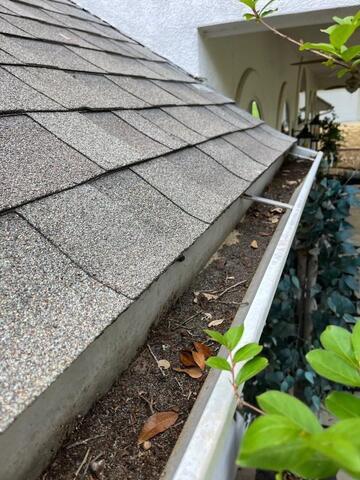
Granule loss diagnostics are one of the most common questions New Braunfels and Hill Country homeowners bring to us — especially after spring storm season, when hail events, heavy rain, and high winds all put pressure on roofing systems at once. The honest answer: it depends on how much, where it's coming from, and on a roof of what age. Granules are the colored mineral stones embedded in the surface of asphalt shingles. They protect the underlying asphalt mat from UV degradation. As they wear off, the mat is exposed and the shingle's life clock accelerates dramatically. In a Central Texas climate — where UV intensity and summer heat are as aggressive as anywhere in the country — that acceleration is meaningful.
Some granule loss across a roof's life is normal and expected. Excessive loss is one of the clearest signals that a roof is approaching end-of-life, or that a hail event has caused damage worth documenting for an insurance claim.
At Klaus Roofing Systems of Texas Hill Country, we inspect roofs with various levels of granule loss every week. This guide covers what's normal, what's a warning sign, and what to do at each stage.
TL;DR
Granule loss is normal across an asphalt shingle's life. A small handful of granules per gutter run after a storm season is typical. Significant warning signs: bald patches visible on the shingle surface, granule piles concentrated in downspouts, dark or light color variation across roof slopes, and granule volume that noticeably increases year over year. Excessive loss on a roof under 15 years old usually means hail damage, ventilation problems, or a manufacturing defect. Excessive loss on a roof 15+ years old is end-of-life. Inspection determines next steps — replacement is on the table once visible mat exposure is widespread.
What Granules Actually Do
The colored mineral granules on the surface of asphalt shingles serve three critical purposes:
- UV protection: Granules shield the underlying asphalt mat from solar degradation. In Central Texas, where UV intensity is among the highest in the continental U.S., this function is especially important. Without granules, the mat oxidizes and shrinks within 1–3 years.
- Fire resistance: The mineral coating helps shingles meet UL fire ratings — relevant in a region where wildfire risk is a real consideration in parts of the Hill Country.
- Color and aesthetic: Granules carry the visible color of the shingle and determine how the roof looks from the street.
When granules come off, the shingle is functionally exposed. UV degradation accelerates. Asphalt becomes brittle and begins to crack under the thermal cycling that Texas summers produce. Color fades or shifts toward gray. The shingle is approaching end-of-life from that point forward, even if the structural integrity hasn't visibly failed yet.
Normal Granule Loss Across a Roof's Life
| Roof Age | Expected Granule Loss | Recommended Action |
|---|---|---|
| 0–2 years | Excess factory granules washing off — normal | Monitor |
| 3–10 years | Minimal — small handful per gutter run after storms | Monitor |
| 11–15 years | Increasing — slightly more than years 3–10 | Annual inspection |
| 16–20 years | Significant — visible accumulation in gutters | Plan for replacement |
| 20+ years | Heavy — mat exposure visible from ground | Replace soon |
Warning Signs of Excessive Granule Loss
Bald Patches on the Shingle Surface
The clearest warning sign. Bare asphalt mat visible from the ground or on close inspection — black or dark gray patches against the surrounding granular surface. Once visible mat exposure is widespread, the roof is in active end-of-life and replacement is needed within 1–3 years. In a Texas climate, exposed mat deteriorates faster than in cooler markets because UV and heat have no off-season.
Granule Piles in Downspouts
Some granules in downspouts is normal. A pile that fills the bottom of the downspout collection area or extends noticeably up the downspout is excessive. Particularly notable when the granule volume is greater this year than last year — the progression rate matters more than the absolute volume in any single season.
Dark and Light Color Variation Across Slopes
A shingle slope that shows visible darker patches mixed with normal-color shingles is showing accelerated granule loss in specific areas. This often indicates localized hail damage, ventilation issues affecting that section of the roof, or in some cases a manufacturing defect. In Texas, south- and west-facing slopes are the most common areas where heat-driven granule loss first becomes visible.
Granules in the Yard or Driveway
After a heavy rain event — common in the Hill Country spring — you may notice fine dark granules accumulated near where downspouts discharge. A small amount is normal post-storm. A noticeable layer is excessive and worth a closer look.
Texture Difference Visible From a Ladder
If you safely climb a ladder to gutter height and run a gloved hand across the bottom course of shingles, the texture should feel rough and granular. Areas that feel smooth have lost most of their surface granules and are accelerating toward end-of-life.
What Causes Excessive Granule Loss
Beyond normal aging, three common causes apply specifically to Hill Country homes:
Hail Damage
Hail is the most significant driver of premature granule loss in Central Texas. Hail strikes knock granules off in a specific pattern — small bruise-like circles where granules are missing in a pattern that matches the storm's impact zone. Texas leads the nation in hail damage insurance claims, and Comal and Hays counties see regular hail events during spring storm season.
After any reported 1-inch or larger hail event in your area, an inspection is warranted to document damage for a potential insurance claim. The pattern matters: random scattered granule loss is usually normal aging, while patterned circular loss with consistent impact marks is hail damage — and potentially a covered insurance loss.
Foot Traffic Damage
Granules come off when shingles are walked on — particularly on older shingles where granule adhesion is already reduced. Roofs with frequent foot traffic from trades, repairs, or gutter cleaning accumulate granule loss in defined walking paths. This shows up as trails of granule-thinned shingles along common access routes on the roof.
Ventilation-Driven Thermal Cycling
Under-ventilated attics are a significant problem in Texas. Attic temperatures in under-ventilated spaces can exceed 150°F on summer afternoons, cooking the shingles from below while the sun attacks them from above. The extreme thermal cycling expands and contracts the shingle repeatedly, loosening granules over time. This shows up as accelerated granule loss across south- and west-facing slopes — the planes that bear the most solar load. Klaus Roofing evaluates attic ventilation as part of every roof inspection because poor ventilation is one of the most common — and preventable — causes of premature shingle failure in this market.
When Granule Loss Means an Insurance Claim
If granule loss is concentrated in patterns suggesting hail damage and you have a documented hail event in your area within the past few years, a contractor inspection followed by an insurance adjuster visit can result in a covered roof replacement. Texas homeowners have strong grounds for hail claims — but the pattern matters. Random scattered loss is usually aging; patterned impact loss with circular bruise marks is hail damage.
For a claim to succeed:
- Document the storm event — National Weather Service hail reports, neighbor claims, and local news coverage all support a claim timeline
- Get a contractor inspection that identifies hail damage specifically and distinguishes it from normal aging
- File within your policy's window — typically one year from the storm event, though this varies by carrier
- Have your contractor walk the roof with the adjuster — a contractor who knows what hail damage looks like and can communicate it clearly to an adjuster is one of the most valuable assets in the claim process
Klaus Roofing provides full insurance claims assistance as a standard part of our service — including Xactimate-format documentation and adjuster coordination.
What Action Looks Like at Each Stage
- Light loss on a young roof (under 10 years): Monitor, run an annual inspection, no immediate action needed.
- Increasing loss on a 12–15 year roof: Get a contractor walk, address any ventilation issues, plan budget for replacement in 3–5 years.
- Significant loss on a 16–20 year roof: Replacement within 1–3 years. Schedule sooner if any leak symptoms are present.
- Bald patches visible from the ground: Replacement is past due — schedule for the next available season before the exposed mat begins to crack.
- Storm-pattern loss at any age: File an insurance claim. Get a contractor inspection that documents the hail damage specifically before you contact your carrier.
Frequently Asked Questions
How much granule loss is normal for a Texas Hill Country home? A small handful per gutter run per storm season is normal across the life of the roof. The amount typically increases gradually as the roof ages. Sudden increases, visible mat exposure, or granule volume that grows significantly year over year are warning signs worth inspecting.
What does granule loss look like? Look for: granules accumulated in gutters and downspout collection areas, darker patches on shingles where the mat is exposed, granules in the yard near downspout discharge after heavy rain, and color variation across individual roof slopes.
Should I file an insurance claim for granule loss? Only if the loss shows hail-pattern damage or follows a documented storm event in your area. Random aging-related granule loss is not a covered loss under most policies. A contractor inspection can tell you quickly whether the pattern is consistent with hail damage or normal wear.
Can granule loss be repaired? No. Once granules come off, the underlying mat begins to oxidize and there is no field treatment that restores them. Replacement is the only permanent fix. Temporary coatings exist but do not restore a shingle to its rated performance.
Will my roof leak when granule loss is severe? Eventually, yes. Bare asphalt mat becomes brittle and cracks under thermal cycling — a process that happens faster under Texas summer conditions than in cooler climates. Cracks propagate through the mat and the shingle eventually splits or fails. The progression is gradual but the endpoint is predictable once significant mat exposure is present.
How does Texas heat affect granule loss compared to other climates? Significantly. The combination of intense UV, sustained high temperatures, and the thermal cycling between summer highs and winter cold snaps accelerates granule adhesion breakdown faster than in northern or coastal climates. A 15-year-old roof in Central Texas has experienced more cumulative UV and thermal stress than a 15-year-old roof in many other parts of the country. That's why annual inspections matter more here, not less.
Where to Start
If you've noticed increasing granule loss this spring — or if you've had a hail event move through your area recently — schedule a roof inspection. A professional walk will identify the cause (aging, hail, ventilation), assess the extent, and give you a clear recommendation: monitor, repair, file a claim, or replace.
At Klaus Roofing Systems of Texas Hill Country, we provide free roof inspections, handle the full insurance claims process when hail damage is present, and give every homeowner a straight answer about what their roof actually needs.
📞 Call 1-830-214-0441 or visit krsoftxhillcountry.com to schedule your free, no-obligation inspection.
Klaus Roofing Systems of Texas Hill Country · 1965 Post Rd Suite 208, New Braunfels, TX 78130 · Contractor ID: 231578 · Serving New Braunfels, Canyon Lake, San Marcos, Seguin, Bulverde, Boerne, San Antonio, and the surrounding Hill Country region. ¿Habla Español? También ofrecemos atención en español.
Written by the Klaus Roofing Systems of Texas Hill Country team — GAF Certified · IKO RoofPro Select Certified · Klaus Roofing Systems Authorized Dealer · Certified Master Craftsman · BBB Accredited