When Were Asphalt Shingles Invented? (And Why It Still Matters Today)
Homeowners often ask practical questions about their roof:
- How long will it last?
- Is this material proven?
- Can I trust it in Texas weather?
That usually leads to a deeper question:
When were asphalt shingles invented—and does that matter today?
Short answer: yes, it matters. A lot.
Because when you understand the history, you understand why asphalt shingles are still the most common roofing system used today.
Before Asphalt Shingles: The Problem Homeowners Faced
Before asphalt shingles, most homes used wood shakes or shingles.
They looked good—but came with real problems:
- High fire risk
- Inconsistent quality
- Poor performance in storms
- Shorter lifespan in harsh climates
As cities grew in the late 1800s, these issues became serious. Fires spread quickly. Roof performance was unpredictable.
Builders and homeowners needed something safer, more consistent, and more reliable.
When Were Asphalt Shingles Invented?
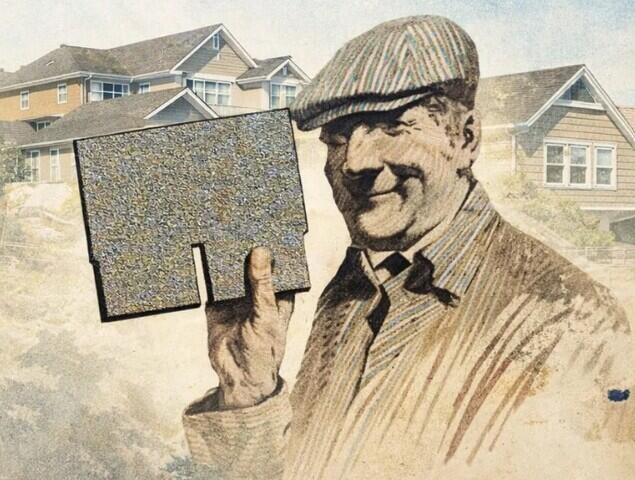
The modern asphalt shingle was first introduced in 1903.
A contractor named Henry M. Reynolds began cutting asphalt roofing rolls into smaller, individual pieces that could be installed in a layered pattern.
That shift—from rolls to individual shingles—was a major breakthrough.
It turned roofing from a craft into a repeatable system.
Why This Innovation Still Matters
Early asphalt shingles solved several key problems:
- Better water protection through overlapping layers
- Improved fire resistance compared to wood
- More consistent installation
- Easier repairs and replacements
The idea was simple—but it worked.
And more importantly, it still works today.
How Asphalt Shingles Became the Standard
By the 1910s and 1920s, manufacturers began mass-producing shingles.
This led to:
- Consistent sizing and quality
- Wider adoption across the country
- Increased trust from homeowners and builders
At the same time, insurance companies began discouraging wood roofs due to fire risk.
Asphalt shingles quickly became the preferred residential roofing system.
How Shingles Evolved Into What We Use Today
Over the past 100+ years, shingles have improved in meaningful ways:
- Stronger materials and mats
- Better wind resistance
- Improved granule technology
- Architectural (dimensional) designs
- Enhanced durability in heat and storms
But here’s the key point:
The core system has not changed.
It’s still a layered, overlapping design built to shed water safely and predictably.
Why This Matters for Homeowners
When you’re investing in a new roof, you don’t want something experimental.
You want something:
- Proven
- Predictable
- Repairable
- Built for long-term performance
Asphalt shingles have been tested for over a century—in heat, hail, wind, and storms.
That’s why they’re still the most common roofing system in Texas today.
The Bigger Takeaway
So, when were shingles invented?
- Invented: 1903
- Widely adopted: 1920s
- Improved continuously ever since
That kind of track record matters.
Because in roofing, the goal isn’t something new—it’s something that works.
What This Means for Your Roof
At Klaus Roofing Systems of Texas Hill Country, we focus on:
- Proper installation (where most roofs fail)
- Full roofing systems—not just shingles
- Protecting your home and property during the process
Because the material matters—but the installation and system matter more.
If you’re unsure about the condition of your roof, we’re local to New Braunfels and happy to take a look.